Most everyone has heard that junior year is the hardest year of high school. While that may not be true for everyone, junior year is definitely not a walk in the park. Many students are facing the threat of standardized testing; an increase in commitments; harder, more advanced classes; jobs after and sometimes during school; and the looming reminder that college applications are only half a year away. “It’s getting real now, and sometimes it’s not real fun,” said Hellgate counselor Tri Pham.
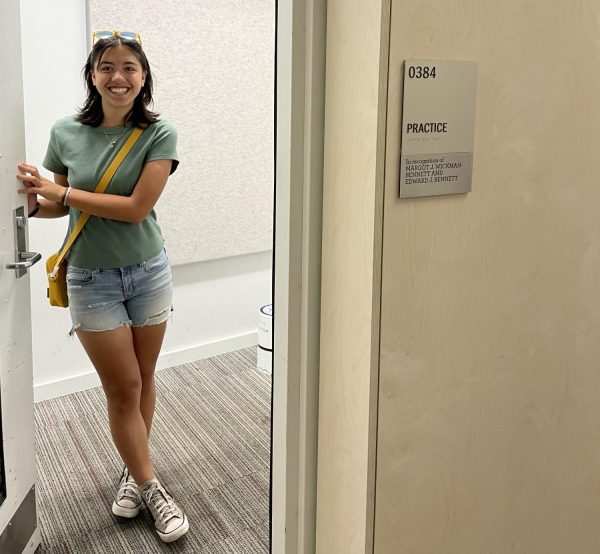
“It’s just all adding up in a way I’ve never experienced,” said Sasha Cowie, junior, after listing off a dizzying number of stressors in her life this year, including but not limited to those cataloged above. She said the biggest one for her is schoolwork.
“That’s the everyday pressure of like, ‘I have three hours of homework’ or like, ‘I have a test’…,” she said. The uphill climb of junior-level classes takes its toll on students.
On the other hand, Branden Roach, another junior, believes most of his stress is coming from outside of school.
“My internship applications, my [audition] music prep for summer camps I want to go to … those give me the most stress,” Roach said. Having dropped one of his hardest classes going into second semester, Roach said he hasn’t experienced as much pain from schoolwork as Cowie, but still acknowledged that this year as a whole has been a step up.
“The workload is exponential. Last year was so chill, and this year, they just ramped it up,” Roach said.
As a junior myself, I am also experiencing what Cowie and Roach have described. Many of my classes are advanced, and homework for those tends to be rather hard. For other classes, it isn’t necessarily the difficulty of the work. Instead, the intensity comes from the quantity. Schoolwork feels endless this year; you finish one assignment but there’s always another one to do. And if not an assignment, there’s studying for the ACT and SAT, applications to pre-college programs, sports and employment to deal with as well.
However, junior year is not without hope, and I don’t want to leave 9th and 10th grade readers afraid of what’s coming up. Cowie outlined a couple of ways she handles stress. “I think for me, the most effective thing to mitigate stress is to just do whatever is stressing me out,” explained Cowie. “Other than that … going outside really helps me and like, moving my body … that always just puts me back into the right headspace and helps me realize that the sky is not falling.”
Cowie is absolutely right about that. While junior year is certainly difficult, it’s not the end of the world, even if it feels that way sometimes. “It’s temporary pain. It’s just gonna hurt for a little while,” Pham said. The academic pressure is on for at most 12 nonconsecutive months (most of junior year and half of senior year), and while that may seem like a lot, there is an end in sight.
Furthermore, there are other ways to make this year better. Roach and Cowie offered some advice for rising juniors. “Don’t just think about what’s on the schedule,” Cowie said. “It’s important to leave yourself a little bit of wiggle room. Stuff is going to happen and you’re not going to be able to commit to everything in the way you want to.”
Roach had similar suggestions. “Make sure you don’t overcrowd your schedule [and] make sure you have time every day that is set aside for homework and for personal care,” he said.
Junior year is just hard, that’s the truth of it. But accepting the struggle and working with it can make the year more manageable.