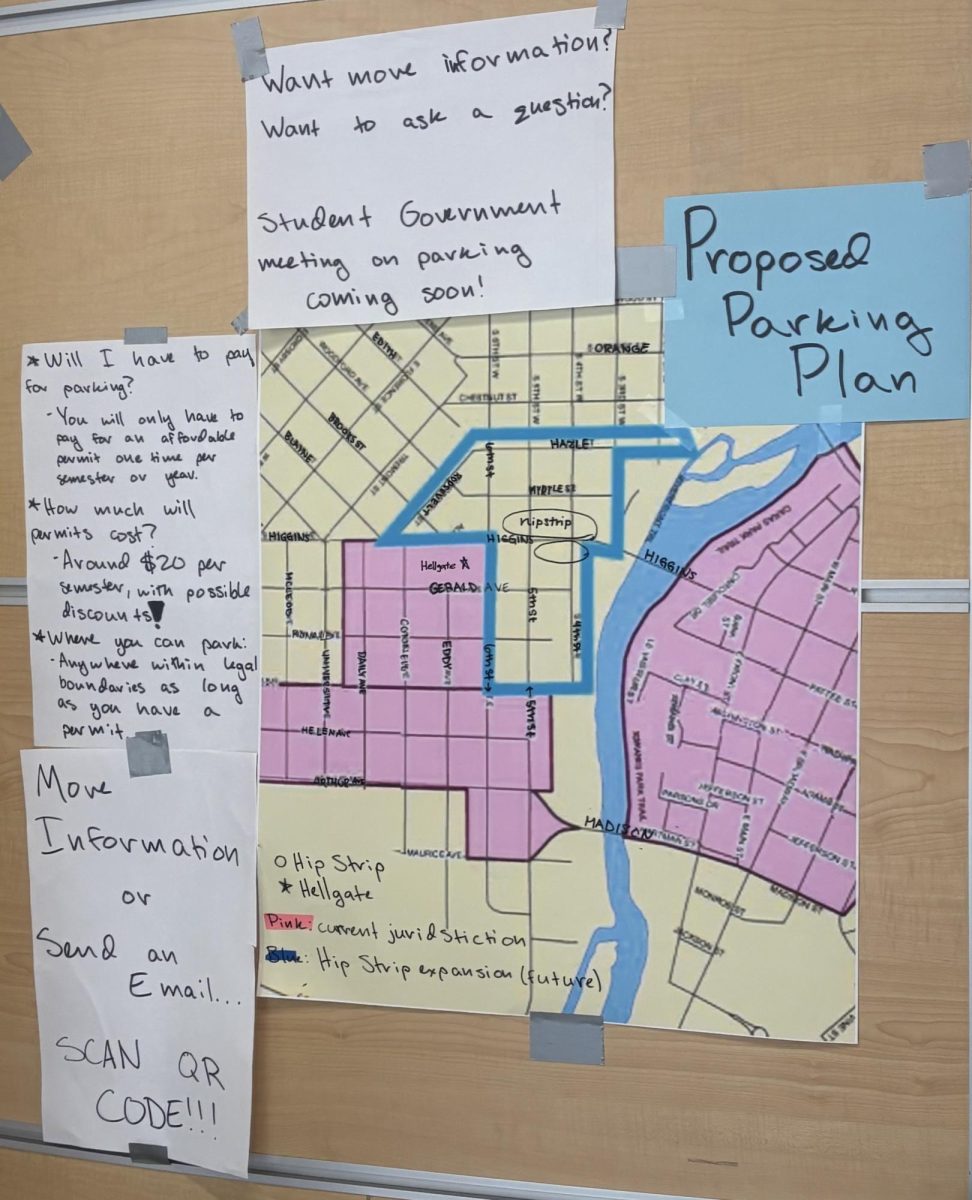
At Hellgate, the only large public high school in Missoula without a parking lot for students, everyone is used to parallel parking on residential streets. The Missoula Parking Commission (MPC) has always had jurisdiction over these streets around the school; that’s why there are meter maids, and students will sometimes receive tickets for parking in 2-hour parking zones.
The recent expansion of the MPC’s jurisdiction covers the Northern part of the Hip Strip. As of right now, they are simply enforcing the 2-hour limits on this side of the bridge. Although, changes are in the works, meaning that the parking situation around Hellgate for students will look different in following years.
“Those jurisdictions never really impacted the parking situation at Hellgate, however with this new jurisdiction comes a new master plan for Missoula as a whole, concurrently with the Missoula Parking Commission,” said Ryall Pham, Hellgate senior and intern at the Missoula Parking Commission.
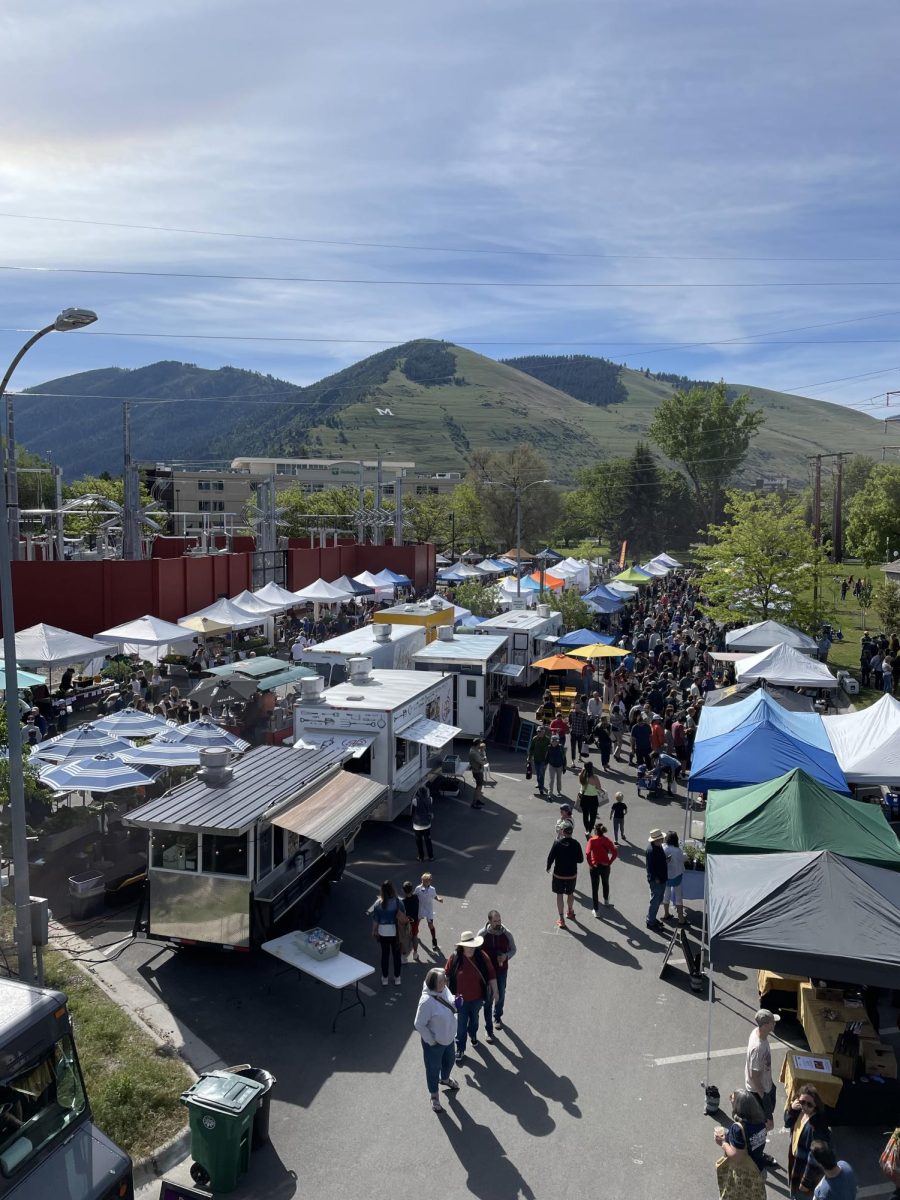
These changes are due to the fact that the area around the Hip Strip has met the MPC’s criteria for expansion into new parking zones; studies showed over 75% occupancy in parking around the Hip Strip, both during the school year and in the summer. This is because the Hip Strip is a highly congested area, due to the residential streets and numerous businesses—and often year-round construction—all within a few blocks. Residents feel as if visitors to the businesses often take up a majority of parking spaces outside their homes. Hellgate students are then left to find whatever parking they can around the school.
“There is going to be a parking permit program that will be enacted within the Missoula parking commission’s jurisdiction—that’ll happen in a year or so. It’ll be very affordable, on the basis of what other permits usually cost,” said Pham. At the University of Montana, students with cars have to pay $250 for their permits. Alternatively, at Big Sky High School, students pay $25 a year for permits to park in their school parking lot. The permits required for Hellgate students in the coming years are looking to be in the same range as Big Sky’s permits—around $25 per year, or around $100 for all four years.
“Using the term ‘pay for parking’ at the moment when it’s only a parking permit is kind of weird because it makes it seem like you’re paying every time you park there, when in reality you’re paying once every year to get a parking permit, and you can park whenever you want within that area for free after you pay for the permit,” says Pham in response to students opposing having to pay to park to attend a public school.
The hope for these permits is to stem the parking spillover into residential neighborhoods by providing parking to “those who need it most,” which includes residents and Hellgate students. “This in no way is an attack on Hellgate; this is for everybody in the area. It just happens to be that Hellgate is the most central, and we have over a thousand students, the vast majority [of whom] drive to school. [Students make up] quite a few stakeholders in an area that’s mostly made of residents and businesses,” explained Pham.
With the incoming construction of apartment buildings at the corner of Myrtle and 4th St, there is expected to be an increase in density and an increase in demand for parking. The permits will ensure parking space for residents and students who frequent these streets during and after the construction.
There are no plans to add meters to the streets around the Hip Strip at this time, though that is a goal for the distant future. The MPC recognizes that the Hip Strip requires different parking management strategies than the Central Business District, which will be decided on and enforced accordingly.
For now, the MPC is beginning to enforce the existing 2-hour signage as a starting point to encourage turn over and open up parking spots around these businesses. Students can expect parking permits to begin being enforced within the next year.
“[This allows the MPC to] operate in a way that allows people to park effectively, making Missoula safer and more sustainable,” said Pham.
Concerns still remain from Hellgate students and faculty, and are based on the fact that these new permits might disadvantage students in a number of ways. In an email to the Hellgate community, Principal Judson Miller said “I expressed my opposition and concern regarding any kind of process that would add complexity or ‘barriers’ to our HHS.”
In his email, Miller attached a link to the MPC’s “Engage Missoula” webpage that details their next steps for introducing new parking jurisdictions to the community. The MPC visited a Hellgate Student Council Meeting in early March to begin talks with the school about the changes, and are planning an ice cream social (suggested by the Hellgate Student Council) as a way to allow students and residents to engage with each other as these changes become implemented.
The webpage clearly states that “None of the stakeholders currently support paid daily or hourly parking as a solution,” and “…students want to ensure that the cost of a permit is affordable for all students and accessible to obtain.”
The process for setting up these permits is still in the works, so issues such as what will happen for people occupying parking spaces during after school events and activities are still being discussed.
The webpage says that a mapping tool will be posted in late April to gather more specific information regarding location and parking demand. Students can expect more details in the coming weeks on what exactly these parking permits mean for Hellgate, and what changes will be made.