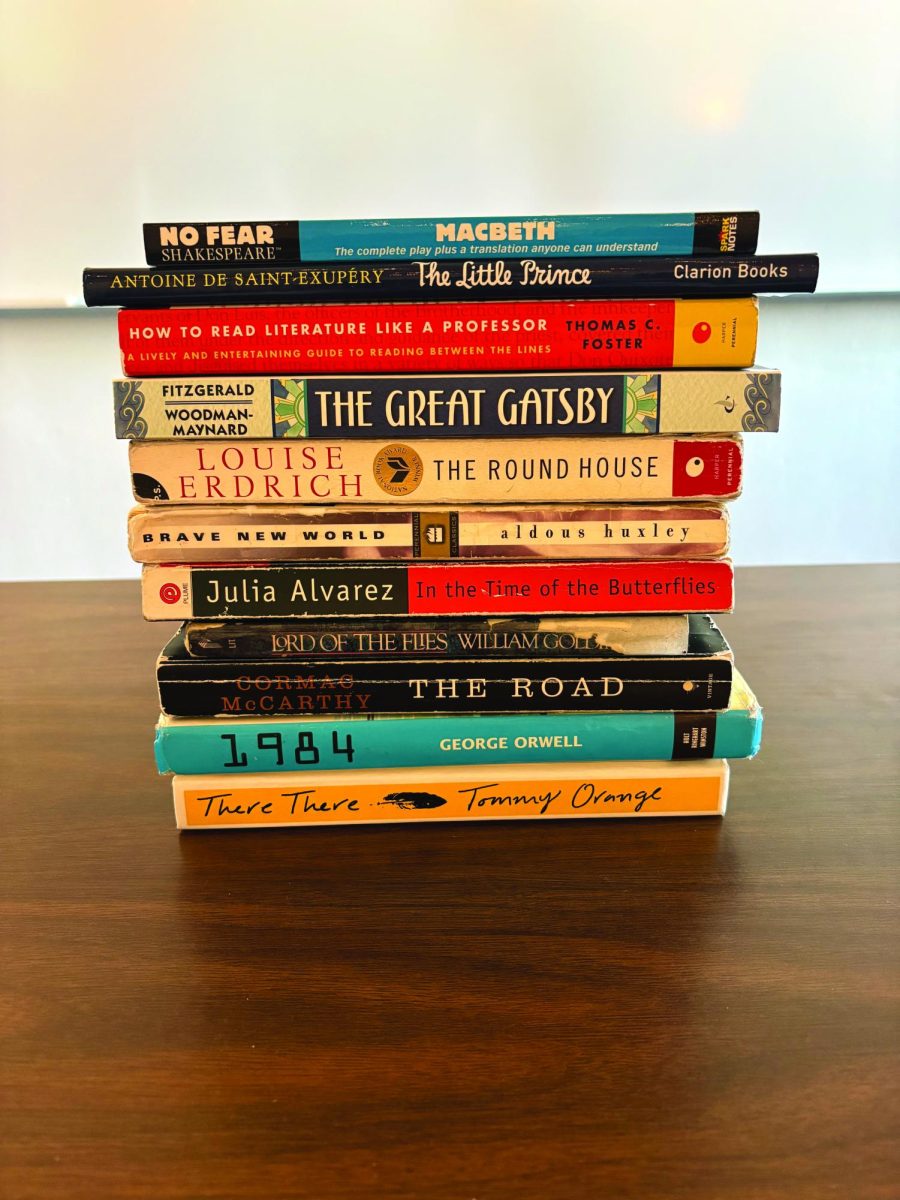
According to Rose Horowitch, a staff writer at The Atlantic, many students no longer arrive at college prepared to read books. Even students of prestigious colleges seem overwhelmed by the amount of reading required. This likely stems from how they were taught throughout the majority of their life. Or more, what they weren’t taught.
Many middle and high schools nationwide assign dozens of excerpts and articles, but require little to no entire book reads. Many of these students never actually read a book cover-to-cover for school throughout their entire middle and high school careers. This dramatically brings down students’ ability to pick out small literary details, follow the overall plot, and majorly lowers reading comprehension levels.
According to Dana Goldstein, a reporter for The New York Times, teachers often have no time left to guide the class through a whole book after they complete their required curriculums and prepare students for exams.
However, Missoula County Public Schools (MCPS) have not been following this national decline. Many English teachers, specifically at Hellgate, find that there is great value in reading full books and continue to express this in their classes.
MCPS English K-12 is currently undergoing a Curriculum Review. Two Hellgate English teachers, Rhian Clark and Caroline Lurgio, are involved in this review with the goal of collaborating with reading and writing teachers across the district.
According to Lurgio, around every five years each subject goes under curriculum review to evaluate what needs to be changed. The main focus this year is addressing the recent changes in Montana’s ELA state standards.
These changes provide new standards that must be implemented in schools across the state by July of 2027. According to the Office of Public Instruction for Montana, the new literacy practices emphasize transferable reading, writing, and communication skills essential for post-secondary success.
The review has also seen a push to move away from the set of national standards for English and math called Common Core, which many schools across the nation have also decided to part from. Extra time is being spent on this review to see what this may look like for MCPS.
According to Goldstein with The New York Times, Common Core initially was seen to better prepare students for college with more thesis-driven writing and nonfiction reading in schools. Many states adopted this in the 2010s leading to schools closely adhering to the curriculum which focused on shorter readings.
Around seven years ago, according to Lurgio, MCPS schools implemented the EngageNY curriculum which aligned with Common Core.
“That curriculum focused heavy on skills which means it was a lot of excerpts and extracts from books and novels because it was all about students learning skills that really had little to do with reading stamina or really the enjoyment of stories… those that developed the curriculum aren’t even using it anymore,” said Clark.
Because this curriculum is heavily skill-based, “we lost learning through reading,” Lurgio said. Today, only some Missoula schools still use it, and the Hellgate English department is only using bits and pieces of it.
Hellgate has made their own insightful decisions to make sure that their English students are continuing to get the reading they need. One example is Hellgate’s choice to read the entire Romeo and Juliet book in Freshman year English, instead of the suggested excerpts.
Clark and Lurgio have very similar views when it comes to the importance of reading full books, beginning to end.
As Clark said, we are “reading stories so we can develop empathy and understanding for different experiences around the world, as well as developing skills.” Without seeing a character’s entire arch and the resolution of conflict, it is harder to develop empathy.
“The biggest thing books offer is learning how to be compassionate and empathetic for groups that we don’t live with,” said Lurgio. When thinking of all the students that aren’t reading, it is troubling to think of the “generation of people who aren’t learning about other cultures and aren’t developing compassionate empathy for groups beyond their own environment.”
Both Lurgio and Clark believe that Hellgate, specifically the IB English program, currently does a good job incorporating full books into their curriculum and preparing students for college. But they both recognize that as teachers they also need to adhere to the needs of students with multiple future pathways. According to Clark, it is very important to prepare college bound students “without it being too overwhelming for those that college isn’t their path.”
The biggest challenge now for schools who do assign full books is getting students to actually do the reading. “The majority of the responsibility falls into the students hands and whether or not they are going to open up that book,” said Clark. “If someone is going to be educated, that is their responsibility.”
“Kids are very resourceful and find other ways to get the information they need out of books,” said Lurgio. “Even if the teacher requires full reading, kids for whatever reason don’t see value or they don’t have time… or they don’t have the reading endurance.”
But it is important to remember that “being educated is a personal journey and a personal responsibility,” said Clark. “Whether or not a student is prepared for college is somewhat up to that student.” It’s their job to “ensure that they are doing the work” to prepare for whatever their future may be.