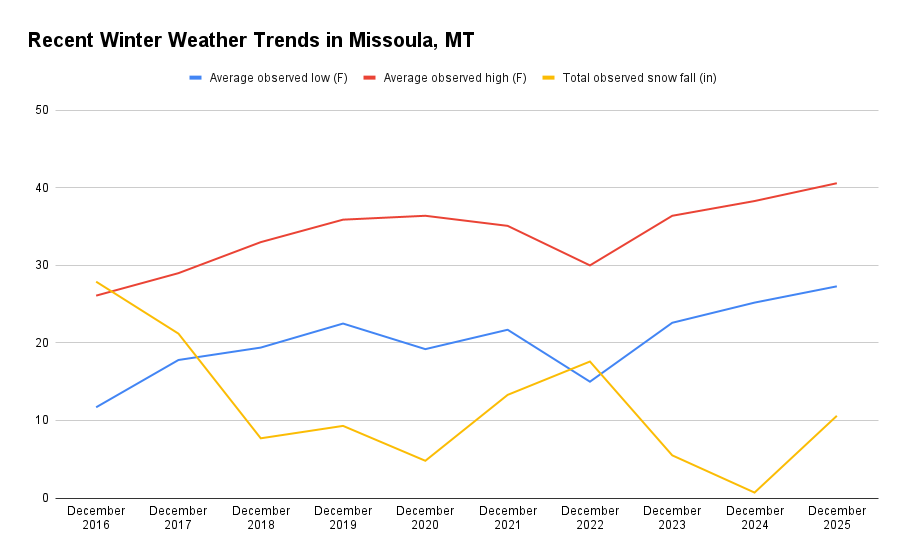
The past few winters in Missoula have been strangely warm and have had little to no snow in the earlier months. Not only is this inconvenient for those who wait all year for the few months of winter snow, or a joy to those who despise the cold, icy months, it’s very concerning for the planet.
According to Weather.gov, the lowest temperature Missoula has seen in the winter months so far is 24.5 degrees Fahrenheit, compared to the average winter low of 17.9 degrees. December got a total of 10.6 inches of snow compared to the average of 8 to 12 inches. January got 1 inch of snow so far with an average of 10 to 12 inches.
Winter is the fastest warming season in 38 U.S states according to the Environmental Defense Fund, an organization focused on ecosystem protection. The Northeast winters have warmed three times faster than summer in recent years. Northern winters have experienced more than five degrees Fahrenheit of warming since 1970.
According to the Climate Reality Project, an organization dedicated to solving the climate crisis, though temperatures are warming, extreme weather events continue to intensify due to the increase of energy in the atmosphere. Winter storms including blizzards and ice storms are becoming more powerful and more destructive.
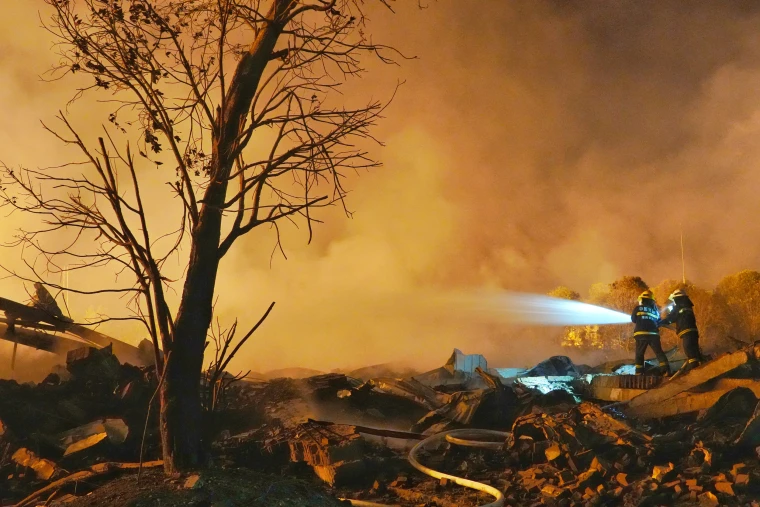
Climate Reality Project also states that the West especially has experienced early melting of the snowpack, a layer of compacted snow and ice that stays throughout the cold months, increasing the risk of wildfires and decreasing freshwater supply. This also affects crops and plants that rely on colder weather to help increase fruit production, strengthen plants more vulnerable to pests, and to prevent early blooming.
These warm temperatures affect more than we may realize, specifically in Montana. According to the Montana Wildlife Federation, warming winters threaten stream closures, earlier stream runoff, lost hunting opportunities, wildfires, reduced snowpack, and overall changes in the state’s outdoor traditions.
Statistics from the Montana Wildlife Federation show that there has been a 15% decline in big game hunting, 33% fewer angling days, and a 33% decline in snow sports. This also affects jobs, with around 4,900 jobs in these fields lost.
Though this warm winter may come as a win to some and a loss to others, the reality is that this is a warning sign. Winter is a crucial and necessary part of the seasonal cycle and without it, we will experience huge disruptions in the environment affecting our everyday lives.