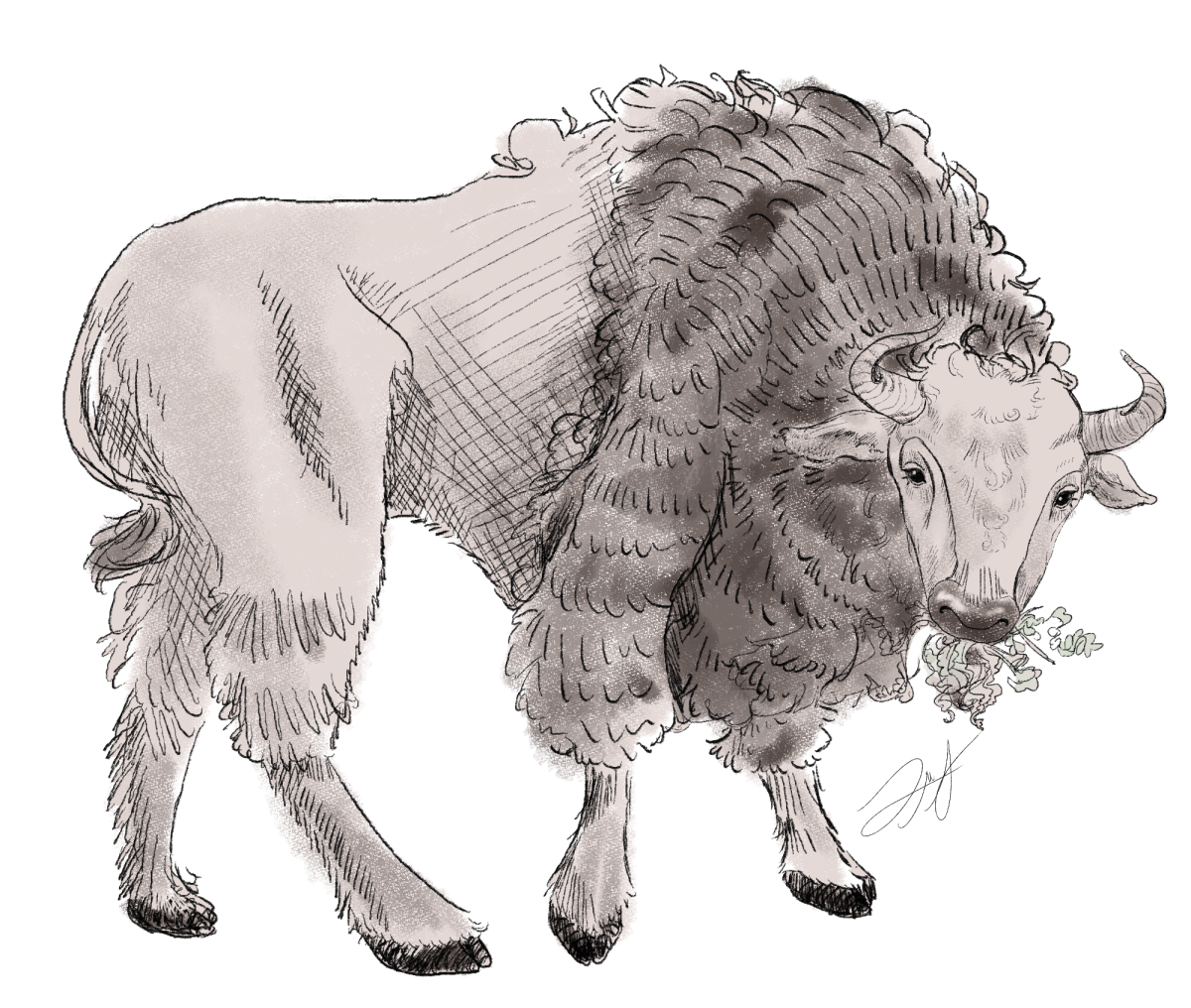
If you’ve ever taken a drive through Montana’s plains, or down through Yellowstone National Park, chances are you’ve been lucky enough to see our country’s national mammal, the American bison. Bison have inhabited the plains of north america for thousands of years, and are a resilient species that have survived several historical attempts to drive them extinct. But now, The Bureau of land management, and the Trump administration are trying to revert back to the times where we drove the bison off Montana’s prairies, and to near extinction.
This fight started back in January of this year, when the Bureau Of Land Management revoked the Phillips county grazing permits held by the American Prairie Foundation. Their reasoning for this decision was that our grasslands should be allotted for the use of livestock that will be used as food, and not bison that are simply roaming there. On May 8th, the BLM made its final decision, revoking permits held by American Prairie for twenty years. BLM cited the 1934 Taylor grazing act, which states that these permits are to be allotted to strictly livestock animals used for “production-oriented purposes”. This specific term however is not defined within the Taylor grazing act at all, invalidating their evidence.
This decision was also heavily disapproved by COLT (coalition of large tribes.) who, according to American Prairie, believe “excluding bison from federal grazing permits could undermine treaty rights, food sovereignty, cultural revitalization efforts, and the continued restoration of buffalo herds across Indian Country.”
Whether or not bison populations should be reintroduced to our grasslands, and allowed to roam free has been a controversial topic in the state of Montana for years. Bison have long sat in limbo as far as classification goes, with ongoing debates in the state as to whether they should be managed as wildlife or livestock. Farmers have argued that roaming bison interfere with their crops and cattle, as well as cause damage to their property (commonly fences). But their main claim has always been that wild bison were an inherent risk in spreading disease to their cattle.
Brusolosis, a bacterial disease found in bison, cows, and elk, causes miscarriages within the herds. According to the national park service, roughly 60% of fully grown female bison in yellowstone test positive for this disease. Because of this, cattle farmers have been weary over bison herds getting too close to their livestock, and infecting them. However, a bison testing positive for brusolosis does not automatically make it transmitable, and so far, there have been no confirmed cases of transmission from bison to cattle in the state of Montana. The real culprit is elk, yet cattle farmers aren’t campaigning for their removal.
This decision to stand with ranchers will be detrimental to our native prairie’s environment. Bison are considered a keystone species, meaning that their presence is necessary to uphold the health of the prairie. Bison’s grazing patterns promote biodiversity in the environment that they inhabit. Bison “Wallowing”, or rolling around in the dirt causes indents within the ground which allow for seeds that may have stuck to their fur to be distributed. As these depressions collect water, they may also become small wetland ecosystems.
Without bison present, any progress made towards restoring our state’s prairie landscapes to their historical state will be overshadowed by their absence. Revoking American Prairie’s rights to graze these animals on land that they are native to is a direct, deplorable attack on our environment, indigenous communities, and state’s history.