The Olympic Games, the most famous sporting event in the world, traces as far back as 776 BC, possibly even earlier. According to History Calling, a platform for historical documentaries, there are many stories and theories of how these games began. The most famous story is the story of Hercules. As legend has it, Hercules established the Olympics in honor of his father, Zeus. He ordered them to be held every four years as a religious festival.
This event was first held in the Sanctuary of Zeus in Olympia Greece. Initially the competition lasted one day. In 684 BC it was extended to four days, then five, and today it spans around two and a half weeks, occurring every two years alternating between the Winter and Summer Olympics.
The original sports included sprints, long jumps, javelin throwing, shotput throwing, boxing, and wrestling. They were called the Olympiakoi Agones meaning Olympic Pains, but later updated to be called the Olympic Games.
The Olympics were held for 1,169 years before coming to a halt. Though there are many theories of why the Olympics vanished for a long period, there is no direct evidence for the cause of this.
The Olympics did not return until the late 1800s when Pierre De Coubertin, known as the father of the modern Olympic Games, re-founded the International Olympic Committee.
According to the International Olympic Committee, Pierre De Coubertin was a leader of the French education reform with the goal to give French children sport in education. At the 1889 Paris Universal Exposition, he organized the world’s first congress on Physical Education. Five years later, on June 23, 1894, 2,000 people rose to their feet at his proposal to revive the Olympic Games.
According to Hearst Networks EMEA, an international broadcaster, the first modern Olympic Games were held in its ancient birthplace of Athens, Greece in 1896. This first event brought in over 200 male athletes from 14 nations with the majority coming from Greece, Germany, France, and Great Britain. 43 events were competed and 60,000 spectators came to watch.
Coubertin’s main goal was to continue the original values of the Ancient Olympics, that sport can promote peace and reconciliation which continues to be at the heart of the Games.
Winners of Olympic events did not receive a gold medal until the 1904 games in St. Louis. Up until that time the winner was awarded a silver medal, an olive branch, and a certificate, and the runner-up got a bronze medal and a laurel branch.
The Olympic Games returned four years later in Paris featuring women competing for the first time. English tennis player Charlotte Cooper became the first individual female Olympic champion.
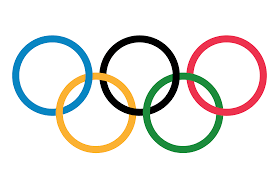
The 1912 Stockholm Olympics were the first to have athletes from five continents, inspiring Baron Pierre de Coubertin to design the Olympic rings. The six colors included in the design reflect the colors in the flags of all nations.
Between 1912 and 1948 the Games included artistic events. Saw painters, architects, writers, musicians, and sculptors competed for medals.
In 1924, the Olympic Village first appeared in Paris at the debut of the Winter Olympics featuring winter sports. The Winter Games were a huge success and continued to be hosted in the same year as the Summer Games until they began being alternated every two years in 1994.
In 1960 the first ever Paralympic Games were held alongside the Summer Olympics. These Olympics continue today giving elite athletes with a range of disabilities an opportunity to compete at the highest level.
Today the Olympics are known as the world’s foremost multi-sport event including thousands of athletes from more than 200 countries worldwide. The Games continue to promote global unity and the celebration of human excellence through sport.